So here's the evidence - pictures from my ordination:
A video of my ordination is posted here. I was unsuccessful at posting it (as flash) in Blogger.
Sunday, May 24, 2009


Friday, May 15, 2009
Ordination!
I was ordained into the Unitarian Universalist ministry on last Sunday, May 11, at my home congregation, Jefferson Unitarian Church, in Golden Colorado.

Rev. Peter Morales offers the Charge to the Minister to Matt
The day was everything I hoped it would be and more! JUC is such a supportive, energetic congregation that we just all had fun with this. Someone noted I looked gleeful, like a kindergartener, during this ceremony, and I think that fits. Everything just seemed to come together perfectly, with many small serendipitous connections emerging. For example, Paula Reed's chalice lighting words on call anticipated Rev. Diane Miller's sermon, on choice and call, which used a reading from the late Rev. Harold Dean, my first minister, as a starting point. Carmon Slater's beautiful stole included images of the Andromeda Galaxy, also on the cover art for the order of service, and which connected with 'Shine', performed by The EverHopefuls. For me, this was grace, the spirit of joy in the house.
Photo by Barb Scherer. I'll post more photos when they are available.
Thursday, April 23, 2009
Heart of Meditation Retreat

Yongey Mingyur Rinpoche, a Tibetan meditation teacher, presented a wonderful meditation retreat this weekend. Rinpoche, as everyone called him, was delightfully funny ("I go to comedy school; no not really!"), with most of that humor self-directed about his life and English. Much laughter on the third day when we and Rinpoche realized simultaneously that a phrase he had frequently used: 'balah, balah, balah', meaning mental jabber or monkey mind, was his interpretation of the American 'blah, blah, blah'. How we all missed, and got it, together.
The essence of the teaching was how one can turn distractions from hinderances to meditation to help for meditation. So, we learned how background noise can be turned from an annoyance to an object of focus for meditation. Similarly with pain, sleepiness, runaway toughts, and emotions. Thus, just as we can meditate on a lovely object, we can meditate on noise, pain sensation, monkey mind, and so on. Rinpoche recounted his own discovery of this in his use of meditation to overcome panic attacks, as seen in this video:
As as I learned to meditate, I suffered through such distractions, and they made the practice difficult. I have also watched many fail to take up a practice because the distractions overwhelmed them. Not surprisingly, I fell in love with this teaching. I continue my own passage meditation practice, but plan to use these techniques when I'm distracted, and plan to use them when I teach others. And I've started to do that, with a brief teaching of meditation basics to the outpatient psych group at the hospital. Being able to give learners choices allowed us to move past the "I tried it before - it didn't work" or "That will never work for me" objections to some fruitful exploration of mindfulness.
Image from http://www.wisdom-books.com/, video originally from http://www.mingyur.org/
Saturday, March 28, 2009
Ordination

Planning is under way for my ordination, at Jefferson Unitarian Church, Golden Colorado, on May 10, 2009 at the traditional time, four in the afternoon. Invitations are being mailed, a service is being outlined -- it's all very exciting.
Some would argue that I should wait until I'm installed at my first settled congregation to be ordained. That could be years, if ever, since I feel called to interim rather than settled ministry. A wise friend reminded me that the older tradition in the New England churches was for the church that 'called out' a minister -- that sent the minister out into the world -- to ordain the minister. Jefferson Unitarian Church is that 'sending' church for me.
May 10 is Mother's Day. It was the only day available in a busy church with busy people. The day fits for me, for my own mother was an inspiration for my call to ministry. She would have been surprised by that, as she was not religious, though she did admit a fondness for 'the Unitarians'.
Saturday, February 07, 2009
The Most Surprising Thing
 What is the most surprising thing we've learned about the universe?
One of the bloggers I follow, Sean Carroll at Cosmic Variance, had a pointer to another blogger, Robin Hansen at Overcoming Bias, whose author asked the question above. The two writers suggest scientific discoveries like "quantum mechanics", or the "fact that the same rules govern both living beings and inanimate matter."
When I think of 'surprising' as 'wondrous', I reach toward a more basic learning. To me, it is surprising and wondrous how big and rich and complex our universe is. This is beyond the imagination of even the most creative dreamers, both past and present. It suggests to me that we should not put too much faith in pretending to know things that are unknown, for we will continue to be surprised. This is why acceptance of the mystery of the unknown is so important to my spirituality.
How might you answer the question: What is the most surprising thing we've learned about the universe?
Photo by DJMcCrady
Friday, January 23, 2009
Ambiguous Loss
 A friend loaned me this wonderful book (Ambiguous Loss: Learning to Live with Unresolved Grief, by Pauline Boss), and it has been helpful both as I provide care in the hospital and as I deal with my own losses. Pauline Boss explores a variety of ambiguous losses, including family members emigrating overseas, dementia, terminal illness, and missing persons. I am reflecting on how my life is touched by each of these kinds of loss. I'm coming to understand that these losses have colored the way I grieve, and the way I relate with my family. Some of these patterns are healthy and enrich my life, such as my attempts to insure my dad's independence and ability to live at home even as he ages and becomes frail, and some have been limiting, such as my distance with my mother around the time of her mortal illness.
I've come to wonder whether most losses are in some way ambiguous. Even sudden, definite losses, such as losing a spouse to a heart attack, can lead to patterns of denial and uncertainty. Joan Dideon's The Year of Magical Thinking is an excellent portrayal of just that situation. Grief is a process by which we make new lives that include loss; grief takes time. Whether the loss is sudden or gradual, grief takes time.
Tuesday, January 20, 2009
Significant Words
I thought it would be helpful on this most wonderful inauguration day to put together the words that moved me the most.
Rick Warren's Inaugural Invocation
[ChristianityToday]
Let us pray.
Almighty God, our Father, everything we see and everything we can’t see exists because of you alone. It all comes from you. It all belongs to you. It all exists for your glory.
History is your story. The Scripture tells us, “Hear O Israel, the Lord is our God. The Lord is One.” And you are the compassionate and merciful one. And you are loving to everyone you have made.
Now, today, we rejoice not only in America’s peaceful transfer of power for the 44th time. We celebrate a hingepoint of history with the inauguration of our first African American president of the United States. We are so grateful to live in this land, a land of unequaled possibility, where the son of an African immigrant can rise to the highest level of our leadership. And we know today that Dr. King and a great cloud of witnesses are shouting in heaven.
Give to our new President, Barack Obama, the wisdom to lead us with humility, the courage to lead us with integrity, the compassion to lead us with generosity. Bless and protect him, his family, Vice President Biden, the cabinet, and every one of our freely elected leaders.
Help us, O God, to remember that we are Americans, united not by race, or religion, or blood, but to our commitment to freedom and justice for all. When we focus on ourselves, when we fight each other, when we forget you, forgive us. When we presume that our greatness and our prosperity is ours alone, forgive us. When we fail to treat our fellow human beings and all the earth with the respect that they deserve, forgive us. And as we face these difficult days ahead, may we have a new birth of clarity in our aims, responsibility in our actions, humility in our approaches, and civility in our attitudes, even when we differ.
Help us to share, to serve and to seek the common good of all. May all people of goodwill today join together to work for a more just, a more healthy and a more prosperous nation and a peaceful planet. And may we never forget that one day all nations and all people will stand accountable before you. We now commit our new president and his wife, Michelle and his daughters, Malia and Sasha, into your loving care.
I humbly ask this in the name of the one who changed my life, Yeshua, Isa, Jesus [Spanish pronunciation], Jesus, who taught us to pray:
“Our Father, who art in heaven, hallowed be thy name. Thy kingdom come. Thy will be done on earth as it is in heaven. Give us this day our daily bread and forgive us our trespasses as we forgive those who trespass against us. And lead us not into temptation, but deliver us from evil. For thine is the kingdom and the power and the glory forever. Amen."
Barack Obama's Inaugural Address
[Yahoo News]
My fellow citizens:
I stand here today humbled by the task before us, grateful for the trust you have bestowed, mindful of the sacrifices borne by our ancestors. I thank President Bush for his service to our nation, as well as the generosity and cooperation he has shown throughout this transition.
Forty-four Americans have now taken the presidential oath. The words have been spoken during rising tides of prosperity and the still waters of peace. Yet, every so often the oath is taken amidst gathering clouds and raging storms. At these moments, America has carried on not simply because of the skill or vision of those in high office, but because we the people have remained faithful to the ideals of our forebears, and true to our founding documents.
So it has been. So it must be with this generation of Americans.
That we are in the midst of crisis is now well understood. Our nation is at war, against a far-reaching network of violence and hatred. Our economy is badly weakened, a consequence of greed and irresponsibility on the part of some, but also our collective failure to make hard choices and prepare the nation for a new age. Homes have been lost; jobs shed; businesses shuttered. Our health care is too costly; our schools fail too many; and each day brings further evidence that the ways we use energy strengthen our adversaries and threaten our planet.
These are the indicators of crisis, subject to data and statistics. Less measurable but no less profound is a sapping of confidence across our land — a nagging fear that America's decline is inevitable, and that the next generation must lower its sights.
Today I say to you that the challenges we face are real. They are serious and they are many. They will not be met easily or in a short span of time. But know this, America — they will be met.
On this day, we gather because we have chosen hope over fear, unity of purpose over conflict and discord.
On this day, we come to proclaim an end to the petty grievances and false promises, the recriminations and worn out dogmas, that for far too long have strangled our politics.
We remain a young nation, but in the words of Scripture, the time has come to set aside childish things. The time has come to reaffirm our enduring spirit; to choose our better history; to carry forward that precious gift, that noble idea, passed on from generation to generation: the God-given promise that all are equal, all are free and all deserve a chance to pursue their full measure of happiness.
In reaffirming the greatness of our nation, we understand that greatness is never a given. It must be earned. Our journey has never been one of shortcuts or settling for less. It has not been the path for the faint-hearted — for those who prefer leisure over work, or seek only the pleasures of riches and fame. Rather, it has been the risk-takers, the doers, the makers of things — some celebrated but more often men and women obscure in their labor, who have carried us up the long, rugged path towards prosperity and freedom.
For us, they packed up their few worldly possessions and traveled across oceans in search of a new life.
For us, they toiled in sweatshops and settled the West; endured the lash of the whip and plowed the hard earth.
For us, they fought and died, in places like Concord and Gettysburg; Normandy and Khe Sanh.
Time and again these men and women struggled and sacrificed and worked till their hands were raw so that we might live a better life. They saw America as bigger than the sum of our individual ambitions; greater than all the differences of birth or wealth or faction.
This is the journey we continue today. We remain the most prosperous, powerful nation on Earth. Our workers are no less productive than when this crisis began. Our minds are no less inventive, our goods and services no less needed than they were last week or last month or last year. Our capacity remains undiminished. But our time of standing pat, of protecting narrow interests and putting off unpleasant decisions — that time has surely passed. Starting today, we must pick ourselves up, dust ourselves off, and begin again the work of remaking America.
For everywhere we look, there is work to be done. The state of the economy calls for action, bold and swift, and we will act — not only to create new jobs, but to lay a new foundation for growth. We will build the roads and bridges, the electric grids and digital lines that feed our commerce and bind us together. We will restore science to its rightful place, and wield technology's wonders to raise health care's quality and lower its cost. We will harness the sun and the winds and the soil to fuel our cars and run our factories. And we will transform our schools and colleges and universities to meet the demands of a new age. All this we can do. All this we will do.
Now, there are some who question the scale of our ambitions — who suggest that our system cannot tolerate too many big plans. Their memories are short. For they have forgotten what this country has already done; what free men and women can achieve when imagination is joined to common purpose, and necessity to courage.
What the cynics fail to understand is that the ground has shifted beneath them — that the stale political arguments that have consumed us for so long no longer apply. The question we ask today is not whether our government is too big or too small, but whether it works — whether it helps families find jobs at a decent wage, care they can afford, a retirement that is dignified. Where the answer is yes, we intend to move forward. Where the answer is no, programs will end. Those of us who manage the public's dollars will be held to account — to spend wisely, reform bad habits, and do our business in the light of day — because only then can we restore the vital trust between a people and their government.
Nor is the question before us whether the market is a force for good or ill. Its power to generate wealth and expand freedom is unmatched, but this crisis has reminded us that without a watchful eye, the market can spin out of control — and that a nation cannot prosper long when it favors only the prosperous. The success of our economy has always depended not just on the size of our gross domestic product, but on the reach of our prosperity; on our ability to extend opportunity to every willing heart — not out of charity, but because it is the surest route to our common good.
As for our common defense, we reject as false the choice between our safety and our ideals. Our founding fathers ... our found fathers, faced with perils we can scarcely imagine, drafted a charter to assure the rule of law and the rights of man, a charter expanded by the blood of generations. Those ideals still light the world, and we will not give them up for expedience's sake. And so to all the other peoples and governments who are watching today, from the grandest capitals to the small village where my father was born: know that America is a friend of each nation and every man, woman, and child who seeks a future of peace and dignity, and that we are ready to lead once more.
Recall that earlier generations faced down fascism and communism not just with missiles and tanks, but with sturdy alliances and enduring convictions. They understood that our power alone cannot protect us, nor does it entitle us to do as we please. Instead, they knew that our power grows through its prudent use; our security emanates from the justness of our cause, the force of our example, the tempering qualities of humility and restraint.
We are the keepers of this legacy. Guided by these principles once more, we can meet those new threats that demand even greater effort — even greater cooperation and understanding between nations. We will begin to responsibly leave Iraq to its people, and forge a hard-earned peace in Afghanistan. With old friends and former foes, we will work tirelessly to lessen the nuclear threat, and roll back the specter of a warming planet. We will not apologize for our way of life, nor will we waver in its defense, and for those who seek to advance their aims by inducing terror and slaughtering innocents, we say to you now that our spirit is stronger and cannot be broken; you cannot outlast us, and we will defeat you.
For we know that our patchwork heritage is a strength, not a weakness. We are a nation of Christians and Muslims, Jews and Hindus — and non-believers. We are shaped by every language and culture, drawn from every end of this Earth; and because we have tasted the bitter swill of civil war and segregation, and emerged from that dark chapter stronger and more united, we cannot help but believe that the old hatreds shall someday pass; that the lines of tribe shall soon dissolve; that as the world grows smaller, our common humanity shall reveal itself; and that America must play its role in ushering in a new era of peace.
To the Muslim world, we seek a new way forward, based on mutual interest and mutual respect. To those leaders around the globe who seek to sow conflict, or blame their society's ills on the West — know that your people will judge you on what you can build, not what you destroy. To those who cling to power through corruption and deceit and the silencing of dissent, know that you are on the wrong side of history; but that we will extend a hand if you are willing to unclench your fist.
To the people of poor nations, we pledge to work alongside you to make your farms flourish and let clean waters flow; to nourish starved bodies and feed hungry minds. And to those nations like ours that enjoy relative plenty, we say we can no longer afford indifference to the suffering outside our borders; nor can we consume the world's resources without regard to effect. For the world has changed, and we must change with it.
As we consider the road that unfolds before us, we remember with humble gratitude those brave Americans who, at this very hour, patrol far-off deserts and distant mountains. They have something to tell us, just as the fallen heroes who lie in Arlington whisper through the ages. We honor them not only because they are guardians of our liberty, but because they embody the spirit of service; a willingness to find meaning in something greater than themselves. And yet, at this moment — a moment that will define a generation — it is precisely this spirit that must inhabit us all.
For as much as government can do and must do, it is ultimately the faith and determination of the American people upon which this nation relies. It is the kindness to take in a stranger when the levees break, the selflessness of workers who would rather cut their hours than see a friend lose their job which sees us through our darkest hours. It is the firefighter's courage to storm a stairway filled with smoke, but also a parent's willingness to nurture a child, that finally decides our fate.
Our challenges may be new. The instruments with which we meet them may be new. But those values upon which our success depends — hard work and honesty, courage and fair play, tolerance and curiosity, loyalty and patriotism — these things are old. These things are true. They have been the quiet force of progress throughout our history. What is demanded then is a return to these truths. What is required of us now is a new era of responsibility — a recognition, on the part of every American, that we have duties to ourselves, our nation, and the world, duties that we do not grudgingly accept but rather seize gladly, firm in the knowledge that there is nothing so satisfying to the spirit, so defining of our character, than giving our all to a difficult task.
This is the price and the promise of citizenship.
This is the source of our confidence — the knowledge that God calls on us to shape an uncertain destiny.
This is the meaning of our liberty and our creed — why men and women and children of every race and every faith can join in celebration across this magnificent Mall, and why a man whose father less than sixty years ago might not have been served at a local restaurant can now stand before you to take a most sacred oath.
So let us mark this day with remembrance, of who we are and how far we have traveled. In the year of America's birth, in the coldest of months, a small band of patriots huddled by dying campfires on the shores of an icy river. The capital was abandoned. The enemy was advancing. The snow was stained with blood. At a moment when the outcome of our revolution was most in doubt, the father of our nation ordered these words be read to the people:
"Let it be told to the future world ... that in the depth of winter, when nothing but hope and virtue could survive...that the city and the country, alarmed at one common danger, came forth to meet (it)."
America, in the face of our common dangers, in this winter of our hardship, let us remember these timeless words. With hope and virtue, let us brave once more the icy currents, and endure what storms may come. Let it be said by our children's children that when we were tested we refused to let this journey end, that we did not turn back nor did we falter; and with eyes fixed on the horizon and God's grace upon us, we carried forth that great gift of freedom and delivered it safely to future generations.
Thank you. God bless you. And God bless the United States of America.
Elizabeth Alexander’s Inaugural Poem
[CQ Transcriptswire]
Praise song for the day.
Each day we go about our business, walking past each other, catching each others’ eyes or not, about to speak or speaking. All about us is noise. All about us is noise and bramble, thorn and din, each one of our ancestors on our tongues. Someone is stitching up a hem, darning a hole in a uniform, patching a tire, repairing the things in need of repair.
Someone is trying to make music somewhere with a pair of wooden spoons on an oil drum with cello, boom box, harmonica, voice.
A woman and her son wait for the bus.
A farmer considers the changing sky; A teacher says, “Take out your pencils. Begin.”
We encounter each other in words, words spiny or smooth, whispered or declaimed; words to consider, reconsider.
We cross dirt roads and highways that mark the will of someone and then others who said, “I need to see what’s on the other side; I know there’s something better down the road.”
We need to find a place where we are safe; We walk into that which we cannot yet see.
Say it plain, that many have died for this day. Sing the names of the dead who brought us here, who laid the train tracks, raised the bridges, picked the cotton and the lettuce, built brick by brick the glittering edifices they would then keep clean and work inside of.
Praise song for struggle; praise song for the day. Praise song for every hand-lettered sign; The figuring it out at kitchen tables.
Some live by “Love thy neighbor as thy self.”
Others by first do no harm, or take no more than you need.
What if the mightiest word is love, love beyond marital, filial, national. Love that casts a widening pool of light. Love with no need to preempt grievance.
In today’s sharp sparkle, this winter air, anything can be made, any sentence begun.
On the brink, on the brim, on the cusp -- praise song for walking forward in that light.
Joseph Lowery's Benediction
[Washington Post]
God of our weary years, god of our silent tears, thou, who has brought us thus far along the way, thou, who has by thy might led us into the light, keep us forever in the path we pray, lest our feet stray from the places, our god, where we met thee, lest our hearts, drunk with the wine of the world, we forget thee.
Shadowed beneath thy hand, may we forever stand true to thee, oh God, and true to our native land.
We truly give thanks for the glorious experience we've shared this day.
We pay now, oh Lord, for your blessing upon thy servant Barack Obama, the 44th president of these United States, his family and his administration.
He has come to this high office at a low moment in the national, and indeed the global, fiscal climate. But because we know you got the whole world in your hands, we pray for not only our nation, but for the community of nations.
Our faith does not shrink though pressed by the flood of mortal ills.
For we know that, Lord, you are able and you're willing to work through faithful leadership to restore stability, mend our brokenness, heal our wounds, and deliver us from the exploitation of the poor, of the least of these, and from favoritism toward the rich, the elite of these.
We thank you for the empowering of thy servant, our 44th president, to inspire our nation to believe that yes we can work together to achieve a more perfect union.
And while we have sown the seeds of greed -- the wind of greed and corruption, and even as we reap the whirlwind of social and economic disruption, we seek forgiveness and we come in a spirit of unity and solidarity to commit our support to our president by our willingness to make sacrifices, to respect your creation, to turn to each other and not on each other.
And now, Lord, in the complex arena of human relations, help us to make choices on the side of love, not hate; on the side of inclusion, not exclusion; tolerance, not intolerance.
And as we leave this mountain top, help us to hold on to the spirit of fellowship and the oneness of our family. Let us take that power back to our homes, our workplaces, our churches, our temples, our mosques, or wherever we seek your will.
Bless President Barack, First Lady Michelle. Look over our little angelic Sasha and Malia.
We go now to walk together as children, pledging that we won't get weary in the difficult days ahead. We know you will not leave us alone.
With your hands of power and your heart of love, help us then, now, Lord, to work for that day when nations shall not lift up sword against nation, when tanks will be beaten into tractors, when every man and every woman shall sit under his or her own vine and fig tree and none shall be afraid, when justice will roll down like waters and righteousness as a mighty stream.
Lord, in the memory of all the saints who from their labors rest, and in the joy of a new beginning, we ask you to help us work for that day when black will not be asked to get in back, when brown can stick around, when yellow will be mellow, when the red man can get ahead, man; and when white will embrace what is right. That all those who do justice and love mercy say Amen. Say Amen. And Amen.
Rick Warren's Inaugural Invocation
[ChristianityToday]
Let us pray.
Almighty God, our Father, everything we see and everything we can’t see exists because of you alone. It all comes from you. It all belongs to you. It all exists for your glory.
History is your story. The Scripture tells us, “Hear O Israel, the Lord is our God. The Lord is One.” And you are the compassionate and merciful one. And you are loving to everyone you have made.
Now, today, we rejoice not only in America’s peaceful transfer of power for the 44th time. We celebrate a hingepoint of history with the inauguration of our first African American president of the United States. We are so grateful to live in this land, a land of unequaled possibility, where the son of an African immigrant can rise to the highest level of our leadership. And we know today that Dr. King and a great cloud of witnesses are shouting in heaven.
Give to our new President, Barack Obama, the wisdom to lead us with humility, the courage to lead us with integrity, the compassion to lead us with generosity. Bless and protect him, his family, Vice President Biden, the cabinet, and every one of our freely elected leaders.
Help us, O God, to remember that we are Americans, united not by race, or religion, or blood, but to our commitment to freedom and justice for all. When we focus on ourselves, when we fight each other, when we forget you, forgive us. When we presume that our greatness and our prosperity is ours alone, forgive us. When we fail to treat our fellow human beings and all the earth with the respect that they deserve, forgive us. And as we face these difficult days ahead, may we have a new birth of clarity in our aims, responsibility in our actions, humility in our approaches, and civility in our attitudes, even when we differ.
Help us to share, to serve and to seek the common good of all. May all people of goodwill today join together to work for a more just, a more healthy and a more prosperous nation and a peaceful planet. And may we never forget that one day all nations and all people will stand accountable before you. We now commit our new president and his wife, Michelle and his daughters, Malia and Sasha, into your loving care.
I humbly ask this in the name of the one who changed my life, Yeshua, Isa, Jesus [Spanish pronunciation], Jesus, who taught us to pray:
“Our Father, who art in heaven, hallowed be thy name. Thy kingdom come. Thy will be done on earth as it is in heaven. Give us this day our daily bread and forgive us our trespasses as we forgive those who trespass against us. And lead us not into temptation, but deliver us from evil. For thine is the kingdom and the power and the glory forever. Amen."
Barack Obama's Inaugural Address
[Yahoo News]
My fellow citizens:
I stand here today humbled by the task before us, grateful for the trust you have bestowed, mindful of the sacrifices borne by our ancestors. I thank President Bush for his service to our nation, as well as the generosity and cooperation he has shown throughout this transition.
Forty-four Americans have now taken the presidential oath. The words have been spoken during rising tides of prosperity and the still waters of peace. Yet, every so often the oath is taken amidst gathering clouds and raging storms. At these moments, America has carried on not simply because of the skill or vision of those in high office, but because we the people have remained faithful to the ideals of our forebears, and true to our founding documents.
So it has been. So it must be with this generation of Americans.
That we are in the midst of crisis is now well understood. Our nation is at war, against a far-reaching network of violence and hatred. Our economy is badly weakened, a consequence of greed and irresponsibility on the part of some, but also our collective failure to make hard choices and prepare the nation for a new age. Homes have been lost; jobs shed; businesses shuttered. Our health care is too costly; our schools fail too many; and each day brings further evidence that the ways we use energy strengthen our adversaries and threaten our planet.
These are the indicators of crisis, subject to data and statistics. Less measurable but no less profound is a sapping of confidence across our land — a nagging fear that America's decline is inevitable, and that the next generation must lower its sights.
Today I say to you that the challenges we face are real. They are serious and they are many. They will not be met easily or in a short span of time. But know this, America — they will be met.
On this day, we gather because we have chosen hope over fear, unity of purpose over conflict and discord.
On this day, we come to proclaim an end to the petty grievances and false promises, the recriminations and worn out dogmas, that for far too long have strangled our politics.
We remain a young nation, but in the words of Scripture, the time has come to set aside childish things. The time has come to reaffirm our enduring spirit; to choose our better history; to carry forward that precious gift, that noble idea, passed on from generation to generation: the God-given promise that all are equal, all are free and all deserve a chance to pursue their full measure of happiness.
In reaffirming the greatness of our nation, we understand that greatness is never a given. It must be earned. Our journey has never been one of shortcuts or settling for less. It has not been the path for the faint-hearted — for those who prefer leisure over work, or seek only the pleasures of riches and fame. Rather, it has been the risk-takers, the doers, the makers of things — some celebrated but more often men and women obscure in their labor, who have carried us up the long, rugged path towards prosperity and freedom.
For us, they packed up their few worldly possessions and traveled across oceans in search of a new life.
For us, they toiled in sweatshops and settled the West; endured the lash of the whip and plowed the hard earth.
For us, they fought and died, in places like Concord and Gettysburg; Normandy and Khe Sanh.
Time and again these men and women struggled and sacrificed and worked till their hands were raw so that we might live a better life. They saw America as bigger than the sum of our individual ambitions; greater than all the differences of birth or wealth or faction.
This is the journey we continue today. We remain the most prosperous, powerful nation on Earth. Our workers are no less productive than when this crisis began. Our minds are no less inventive, our goods and services no less needed than they were last week or last month or last year. Our capacity remains undiminished. But our time of standing pat, of protecting narrow interests and putting off unpleasant decisions — that time has surely passed. Starting today, we must pick ourselves up, dust ourselves off, and begin again the work of remaking America.
For everywhere we look, there is work to be done. The state of the economy calls for action, bold and swift, and we will act — not only to create new jobs, but to lay a new foundation for growth. We will build the roads and bridges, the electric grids and digital lines that feed our commerce and bind us together. We will restore science to its rightful place, and wield technology's wonders to raise health care's quality and lower its cost. We will harness the sun and the winds and the soil to fuel our cars and run our factories. And we will transform our schools and colleges and universities to meet the demands of a new age. All this we can do. All this we will do.
Now, there are some who question the scale of our ambitions — who suggest that our system cannot tolerate too many big plans. Their memories are short. For they have forgotten what this country has already done; what free men and women can achieve when imagination is joined to common purpose, and necessity to courage.
What the cynics fail to understand is that the ground has shifted beneath them — that the stale political arguments that have consumed us for so long no longer apply. The question we ask today is not whether our government is too big or too small, but whether it works — whether it helps families find jobs at a decent wage, care they can afford, a retirement that is dignified. Where the answer is yes, we intend to move forward. Where the answer is no, programs will end. Those of us who manage the public's dollars will be held to account — to spend wisely, reform bad habits, and do our business in the light of day — because only then can we restore the vital trust between a people and their government.
Nor is the question before us whether the market is a force for good or ill. Its power to generate wealth and expand freedom is unmatched, but this crisis has reminded us that without a watchful eye, the market can spin out of control — and that a nation cannot prosper long when it favors only the prosperous. The success of our economy has always depended not just on the size of our gross domestic product, but on the reach of our prosperity; on our ability to extend opportunity to every willing heart — not out of charity, but because it is the surest route to our common good.
As for our common defense, we reject as false the choice between our safety and our ideals. Our founding fathers ... our found fathers, faced with perils we can scarcely imagine, drafted a charter to assure the rule of law and the rights of man, a charter expanded by the blood of generations. Those ideals still light the world, and we will not give them up for expedience's sake. And so to all the other peoples and governments who are watching today, from the grandest capitals to the small village where my father was born: know that America is a friend of each nation and every man, woman, and child who seeks a future of peace and dignity, and that we are ready to lead once more.
Recall that earlier generations faced down fascism and communism not just with missiles and tanks, but with sturdy alliances and enduring convictions. They understood that our power alone cannot protect us, nor does it entitle us to do as we please. Instead, they knew that our power grows through its prudent use; our security emanates from the justness of our cause, the force of our example, the tempering qualities of humility and restraint.
We are the keepers of this legacy. Guided by these principles once more, we can meet those new threats that demand even greater effort — even greater cooperation and understanding between nations. We will begin to responsibly leave Iraq to its people, and forge a hard-earned peace in Afghanistan. With old friends and former foes, we will work tirelessly to lessen the nuclear threat, and roll back the specter of a warming planet. We will not apologize for our way of life, nor will we waver in its defense, and for those who seek to advance their aims by inducing terror and slaughtering innocents, we say to you now that our spirit is stronger and cannot be broken; you cannot outlast us, and we will defeat you.
For we know that our patchwork heritage is a strength, not a weakness. We are a nation of Christians and Muslims, Jews and Hindus — and non-believers. We are shaped by every language and culture, drawn from every end of this Earth; and because we have tasted the bitter swill of civil war and segregation, and emerged from that dark chapter stronger and more united, we cannot help but believe that the old hatreds shall someday pass; that the lines of tribe shall soon dissolve; that as the world grows smaller, our common humanity shall reveal itself; and that America must play its role in ushering in a new era of peace.
To the Muslim world, we seek a new way forward, based on mutual interest and mutual respect. To those leaders around the globe who seek to sow conflict, or blame their society's ills on the West — know that your people will judge you on what you can build, not what you destroy. To those who cling to power through corruption and deceit and the silencing of dissent, know that you are on the wrong side of history; but that we will extend a hand if you are willing to unclench your fist.
To the people of poor nations, we pledge to work alongside you to make your farms flourish and let clean waters flow; to nourish starved bodies and feed hungry minds. And to those nations like ours that enjoy relative plenty, we say we can no longer afford indifference to the suffering outside our borders; nor can we consume the world's resources without regard to effect. For the world has changed, and we must change with it.
As we consider the road that unfolds before us, we remember with humble gratitude those brave Americans who, at this very hour, patrol far-off deserts and distant mountains. They have something to tell us, just as the fallen heroes who lie in Arlington whisper through the ages. We honor them not only because they are guardians of our liberty, but because they embody the spirit of service; a willingness to find meaning in something greater than themselves. And yet, at this moment — a moment that will define a generation — it is precisely this spirit that must inhabit us all.
For as much as government can do and must do, it is ultimately the faith and determination of the American people upon which this nation relies. It is the kindness to take in a stranger when the levees break, the selflessness of workers who would rather cut their hours than see a friend lose their job which sees us through our darkest hours. It is the firefighter's courage to storm a stairway filled with smoke, but also a parent's willingness to nurture a child, that finally decides our fate.
Our challenges may be new. The instruments with which we meet them may be new. But those values upon which our success depends — hard work and honesty, courage and fair play, tolerance and curiosity, loyalty and patriotism — these things are old. These things are true. They have been the quiet force of progress throughout our history. What is demanded then is a return to these truths. What is required of us now is a new era of responsibility — a recognition, on the part of every American, that we have duties to ourselves, our nation, and the world, duties that we do not grudgingly accept but rather seize gladly, firm in the knowledge that there is nothing so satisfying to the spirit, so defining of our character, than giving our all to a difficult task.
This is the price and the promise of citizenship.
This is the source of our confidence — the knowledge that God calls on us to shape an uncertain destiny.
This is the meaning of our liberty and our creed — why men and women and children of every race and every faith can join in celebration across this magnificent Mall, and why a man whose father less than sixty years ago might not have been served at a local restaurant can now stand before you to take a most sacred oath.
So let us mark this day with remembrance, of who we are and how far we have traveled. In the year of America's birth, in the coldest of months, a small band of patriots huddled by dying campfires on the shores of an icy river. The capital was abandoned. The enemy was advancing. The snow was stained with blood. At a moment when the outcome of our revolution was most in doubt, the father of our nation ordered these words be read to the people:
"Let it be told to the future world ... that in the depth of winter, when nothing but hope and virtue could survive...that the city and the country, alarmed at one common danger, came forth to meet (it)."
America, in the face of our common dangers, in this winter of our hardship, let us remember these timeless words. With hope and virtue, let us brave once more the icy currents, and endure what storms may come. Let it be said by our children's children that when we were tested we refused to let this journey end, that we did not turn back nor did we falter; and with eyes fixed on the horizon and God's grace upon us, we carried forth that great gift of freedom and delivered it safely to future generations.
Thank you. God bless you. And God bless the United States of America.
Elizabeth Alexander’s Inaugural Poem
[CQ Transcriptswire]
Praise song for the day.
Each day we go about our business, walking past each other, catching each others’ eyes or not, about to speak or speaking. All about us is noise. All about us is noise and bramble, thorn and din, each one of our ancestors on our tongues. Someone is stitching up a hem, darning a hole in a uniform, patching a tire, repairing the things in need of repair.
Someone is trying to make music somewhere with a pair of wooden spoons on an oil drum with cello, boom box, harmonica, voice.
A woman and her son wait for the bus.
A farmer considers the changing sky; A teacher says, “Take out your pencils. Begin.”
We encounter each other in words, words spiny or smooth, whispered or declaimed; words to consider, reconsider.
We cross dirt roads and highways that mark the will of someone and then others who said, “I need to see what’s on the other side; I know there’s something better down the road.”
We need to find a place where we are safe; We walk into that which we cannot yet see.
Say it plain, that many have died for this day. Sing the names of the dead who brought us here, who laid the train tracks, raised the bridges, picked the cotton and the lettuce, built brick by brick the glittering edifices they would then keep clean and work inside of.
Praise song for struggle; praise song for the day. Praise song for every hand-lettered sign; The figuring it out at kitchen tables.
Some live by “Love thy neighbor as thy self.”
Others by first do no harm, or take no more than you need.
What if the mightiest word is love, love beyond marital, filial, national. Love that casts a widening pool of light. Love with no need to preempt grievance.
In today’s sharp sparkle, this winter air, anything can be made, any sentence begun.
On the brink, on the brim, on the cusp -- praise song for walking forward in that light.
Joseph Lowery's Benediction
[Washington Post]
God of our weary years, god of our silent tears, thou, who has brought us thus far along the way, thou, who has by thy might led us into the light, keep us forever in the path we pray, lest our feet stray from the places, our god, where we met thee, lest our hearts, drunk with the wine of the world, we forget thee.
Shadowed beneath thy hand, may we forever stand true to thee, oh God, and true to our native land.
We truly give thanks for the glorious experience we've shared this day.
We pay now, oh Lord, for your blessing upon thy servant Barack Obama, the 44th president of these United States, his family and his administration.
He has come to this high office at a low moment in the national, and indeed the global, fiscal climate. But because we know you got the whole world in your hands, we pray for not only our nation, but for the community of nations.
Our faith does not shrink though pressed by the flood of mortal ills.
For we know that, Lord, you are able and you're willing to work through faithful leadership to restore stability, mend our brokenness, heal our wounds, and deliver us from the exploitation of the poor, of the least of these, and from favoritism toward the rich, the elite of these.
We thank you for the empowering of thy servant, our 44th president, to inspire our nation to believe that yes we can work together to achieve a more perfect union.
And while we have sown the seeds of greed -- the wind of greed and corruption, and even as we reap the whirlwind of social and economic disruption, we seek forgiveness and we come in a spirit of unity and solidarity to commit our support to our president by our willingness to make sacrifices, to respect your creation, to turn to each other and not on each other.
And now, Lord, in the complex arena of human relations, help us to make choices on the side of love, not hate; on the side of inclusion, not exclusion; tolerance, not intolerance.
And as we leave this mountain top, help us to hold on to the spirit of fellowship and the oneness of our family. Let us take that power back to our homes, our workplaces, our churches, our temples, our mosques, or wherever we seek your will.
Bless President Barack, First Lady Michelle. Look over our little angelic Sasha and Malia.
We go now to walk together as children, pledging that we won't get weary in the difficult days ahead. We know you will not leave us alone.
With your hands of power and your heart of love, help us then, now, Lord, to work for that day when nations shall not lift up sword against nation, when tanks will be beaten into tractors, when every man and every woman shall sit under his or her own vine and fig tree and none shall be afraid, when justice will roll down like waters and righteousness as a mighty stream.
Lord, in the memory of all the saints who from their labors rest, and in the joy of a new beginning, we ask you to help us work for that day when black will not be asked to get in back, when brown can stick around, when yellow will be mellow, when the red man can get ahead, man; and when white will embrace what is right. That all those who do justice and love mercy say Amen. Say Amen. And Amen.
Monday, December 22, 2008
Excellence in Ministry - Continuing Development
One of the hot-button topics in UU ministry is how ministers might receive continuing guidance after full fellowship. This is almost immediately interpreted as 'evaluation', connecting as a tense band of anxiety directly to MFC Rule 24, which describes under what conditions a minister's fellowship might be terminated. I wonder if there is another way this might be approached.
I just talked with one of the professional chaplains at the hospital, and he described a most wonderful experience with the peer review process that is required of professional chaplains. This is a new process: the Association of Professional Chaplains recently began to require these reviews. Basically, every five years, a chaplain puts together a group of three or more peers for a review. The chaplain meets with them and presents to them for an hour and a half or so. This presentation is like a Quaker 'clearing committee', in which the presenter directs the discussion, and the peers ask leading questions, helping the presenter come to better self understanding of career or related issues.
I wonder if we UU ministers, who often operate so independently, might learn something from a model like this. Perhaps we can learn to give and receive feedback in a supportive way, without heaviness of evaluation pulling us all down. Certainly we all deal with enough evaluation in other areas of our ministry!
I just talked with one of the professional chaplains at the hospital, and he described a most wonderful experience with the peer review process that is required of professional chaplains. This is a new process: the Association of Professional Chaplains recently began to require these reviews. Basically, every five years, a chaplain puts together a group of three or more peers for a review. The chaplain meets with them and presents to them for an hour and a half or so. This presentation is like a Quaker 'clearing committee', in which the presenter directs the discussion, and the peers ask leading questions, helping the presenter come to better self understanding of career or related issues.
I wonder if we UU ministers, who often operate so independently, might learn something from a model like this. Perhaps we can learn to give and receive feedback in a supportive way, without heaviness of evaluation pulling us all down. Certainly we all deal with enough evaluation in other areas of our ministry!
Sunday, December 07, 2008
Excellence in Ministry
Christine Robinson over at iMinister has been blogging in preparation for the Excellence in Ministry conference, where she will serve as the official blogger. Some of her initial posts have generated lots of interesting comments. It's hard for me, just over a year out from my visit with the MFC, not to add my thoughts.
Going through the fellowship process wasn't easy. We're not the only denomination that has such a process. I'm watching a friend do the dance of angst as she seeks ordination with the Presbyterians. Their process seems to be more like a bar exam than a dissertation defense, with a battery of written tests that less than half pass on the first try, according to Carol Howard Merritt at Tribal Church. But the Presbyterians face the same question we do: does the process do a fair and effective job of identifying those who will be successful ministers? Or does the denomination instead end up "Saying goodbye to our seminarians, letting them work at Starbucks, while forty percent of our congregations flounder, without pastors?", as Carol puts it. I understand this is true of other mainline denominations, too.
We UUs have been blessed with more ministers than parish positions. The denomination, and individual churches, could be selective. But times are changing. At the GA Presidential Candidates Forum in June, Peter Morales said, "we are going to lose half our ministry during the next presidency. Three out of eight of our ministers are 58 years of age or older." My fear is that as they leave, our congregations will flounder, too, in a typically unique UU twilight zone that is neither lay-led fellowship nor professionally ministered church.
I think of another friend who was happily pursuing ministry as a Licensed Local Pastor in her Methodist congregation. This is a specialized ministry, for a person who intended to serve a specific church. The requirements are less strenuous than ordained ministry; and the expectations of ministry are more narrowly defined. Perhaps this model, or deacons, or some other paraprofessional level of ministry might make sense. Perhaps the path to professional ministry might involve intermediate steps in which the candidate both performs ministry and is paid for it.
We have been bold before. Our lay-led fellowships were a model of church in which no minister is present. They have their places. Can we invent a model of ministry that serves our smaller churches that do want some form of professional ministry? Can we invent a model of ministry that makes new church planting a possibility? Can we invent a model of ministry that engages our most committed laypeople in new levels of engagement and service?
Going through the fellowship process wasn't easy. We're not the only denomination that has such a process. I'm watching a friend do the dance of angst as she seeks ordination with the Presbyterians. Their process seems to be more like a bar exam than a dissertation defense, with a battery of written tests that less than half pass on the first try, according to Carol Howard Merritt at Tribal Church. But the Presbyterians face the same question we do: does the process do a fair and effective job of identifying those who will be successful ministers? Or does the denomination instead end up "Saying goodbye to our seminarians, letting them work at Starbucks, while forty percent of our congregations flounder, without pastors?", as Carol puts it. I understand this is true of other mainline denominations, too.
We UUs have been blessed with more ministers than parish positions. The denomination, and individual churches, could be selective. But times are changing. At the GA Presidential Candidates Forum in June, Peter Morales said, "we are going to lose half our ministry during the next presidency. Three out of eight of our ministers are 58 years of age or older." My fear is that as they leave, our congregations will flounder, too, in a typically unique UU twilight zone that is neither lay-led fellowship nor professionally ministered church.
I think of another friend who was happily pursuing ministry as a Licensed Local Pastor in her Methodist congregation. This is a specialized ministry, for a person who intended to serve a specific church. The requirements are less strenuous than ordained ministry; and the expectations of ministry are more narrowly defined. Perhaps this model, or deacons, or some other paraprofessional level of ministry might make sense. Perhaps the path to professional ministry might involve intermediate steps in which the candidate both performs ministry and is paid for it.
We have been bold before. Our lay-led fellowships were a model of church in which no minister is present. They have their places. Can we invent a model of ministry that serves our smaller churches that do want some form of professional ministry? Can we invent a model of ministry that makes new church planting a possibility? Can we invent a model of ministry that engages our most committed laypeople in new levels of engagement and service?
Saturday, November 22, 2008
DBT as Spiritual Practice
 Yesterday, I attended a one-day training on Dialectical Behavior Therapy, which we use at the hospital to treat patients with various mental illnesses, including borderline personality disorder, depression, and anxiety. As a chaplain, I see many of these patients as they try to understand their illness in terms of their religious beliefs. I've encountered DBT in conversations with these patients (many of whom love to call it Diabolical Behavior Training).
DBT was created by Marsha Linehan, who drew methods from Zen Buddhism to treat suicidal patients. The Buddhist strands are apparent in this therapy. A significant focus of DBT is mindfulness training, learning to focus the mind and attend to one thing at a time. A koan-like 'both-and' aspect is the core of many messages given patients (this is the dialectic part): 'You are doing the best you can' and 'you can do better', or 'I can insist on my rights' and 'I am still a good person'. The Buddhist concept of 'skillful means' runs through the components on skills development and skillful execution.
DBT participants are required to keep a weekly diary card, on which they record numerous aspects of their feelings and behaviors, including use of the skills and abusive or harmful behaviors. The idea is to use the recording to identify patterns and linkages between feelings and behaviors, and then work to modify them.
What strikes me is that DBT looks like spiritual practice, and I mean that in the highest sense. There is an expectation (clearly stated) of mindful attention to the skills and practices. Modifications of lifestyle, such as healthy eating and sleep patterns, are expected of each participant. One is expected to apply an almost devotional repetition to the daily activities through the use of the diary card. These techniques have been shown to be helpful for patients in randomized trials; could they be helpful for all of us, whether healthy or ill? And if DBT can be seen as spiritual practice, does this not support the benefit of spiritual practice (in all forms) for all?
Picture by Untitled blue
Monday, November 03, 2008
Mind-Body Medicine
 Last week, another chaplain resident and I attended a five-day training presented by the Center for Mind-Body Medicine. What a phenomenal experience. It was a sold-out event, with well over two hundred people in attendance, including over twenty from the hospital system that I am part of. We're talking doctors, nurses, psychotherapists, hospice workers, and the rare chaplain or two.
I have encountered many of the healing and self-care tools presented, including meditation, relaxation, biofeedback, movement, and guided imagery, these have been presented in the past as alternatives to science-based medicine. I loved that this training presented significant scientific evidence supporting these tools, including many controlled double-blind studies. The fact that my hospital system and the Veteran's Administration, among others, is beginning to adopt these tools is most promising. As a chaplain, I know that mind and body and spirit are deeply interconnected.
Much of our time was spent in small process groups: eight sessions of two hours each. My co-worker and I noted how these groups compared to the group we have in our Clinical Pastoral Education residency, and how difficult it was for many people, especially mental health workers, to get comfortable being a group participant. Perhaps they are used to leading groups, and not being a participant, or perhaps they just focus on one-on-one client meetings. Part of my hope is that this work may begin a renaissance of group therapy as part of the overall treatment plan for people dealing with mental health issues.
Sunday, September 28, 2008
Sermon: Paths to the Top
 This is a sermon presented to the UU Congregation at Eau Claire, Wisconsin, on Sept. 28, 2008.
Since the congregation is in an interim time, I offered to present (with the interim's approval) on the four varieties of spiritual practice that Peter Tufts Richardson developed. I invited them to add a small hand motion to the Joys and Concerns, 'from my heart out into the universe'; I mention this in the sermon.
It’s so good to be back in this space.
The last time I was here, my hands were sooty and my shirt was sweaty
as I helped my friend Mark Rosauer and several others of you
disembowel and dismantle the old pipe organ that was here.
In an odd way, that was a kind of spiritual experience.
I was glad to be included in the Tuesday morning spiritual practice group
They meet every week
to carry out various improvements to the church building.
The work is satisfying and
There is an easy camaraderie among those who do it
they come nearly every week to work together
compensated with donuts and cups of tea.
Let me assure you that there are many much larger churches
that would be hard pressed to put together even one work party
of a half dozen or more people for one project,
much less do it week after week.
For some of us, great emotional and even spiritual satisfaction
comes from that kind of consistent, devoted effort, week after week, year after year.
For others, spiritual experience comes in a flash,
some momentary event that truly reached down deep inside us,
and turned something, changed something .
Maybe it was a walk in great natural beauty,
or wonderful music, or reading profound poetry.
Whatever the source of such inspirational experiences,
I suspect most of us seek to repeat them,
to find what it is that opens us to them,
to find ways to deepen and better understand them;
and thus better understand the world we inhabit.
This is the essence of spiritual practice.
However we define spirit, the things we do,
be they working, hiking, singing, or meditating,
that carry us into place of inspiration are spiritual practices.
PRESENTATION OF THE MODEL
There's a well-known religious metaphor
that suggests we are each on a spiritual journey,
traveling up a great mountain.
There are numerous paths on that mountain,
paths that wind and cross, that lead mostly up,
but occasionally down and sometimes sideways.
Some paths are gentle and protected,
while others are exposed and treacherous.
But the point is that all these paths ultimately lead to the top,
to whatever it is that we consider ultimate in religious experience.
Most often we think of these distinct paths
as representing different beliefs,
the various theologies that co-exist in the religious landscape.
Here's the Catholic path, there's the Lutheran one,
over there a Buddhist path.
And how we bristle when a person or group
claims that their path is the 'one true path'
and all the others fail to reach the top!
For many of us, this brings up anger at such dogmatic exclusiveness.
For some, such dogmatism brings up sadness
as we recall our own, exclusivist religious upbringing,
and the effort it took us to shed those beliefs.
But there is another way to see these paths we follow to the top of the mountain.
Perhaps these journeys are more about practice than belief,
about what we do
rather than what we think or say.
But hard as it is to articulate our theological beliefs,
we often find it harder to find the words
to describe what spiritual practices touch us and inspire us.
We need a topographic map that points out these paths,
these Journeys, and gives them names.
SOURCE OF THE MODEL
How might we do this mapping?
How might we understand the varieties of spiritual experience?
Since we UUs tend to be rational scientific people,
it might make sense to organize and classify these experiences in some way.
Peter Tufts Richardson, a UU minister, does just this in his book,
Four Spiritualities: Expressions of Self, Expressions of Spirit.
He develops a model that suggests there are four broad types of spirituality,
although they are interrelated.
He suggests that our personality or worldview influences
which of these spiritual practices we will find most appealing.
Now Richardson does not pretend this is a new idea.
He melds an understanding of spiritual practices
from many of the great world religions
to frame his unifying model of four spiritual paths.
Richardson's model also combines these religious ideas
with two specific dimensions of Jungian psychology.
The first dimension is how we perceive the world.
Do we primarily perceive through our senses or through our intuition?
In other words, do we observe things with common sense,
or do we just know through hunches?
The second dimension is how we make decisions.
Do we make choices primarily by thinking things through
or by tapping into our feelings?
That is to say, do we lead with our head or our heart?
The two options in each of these two dimensions
generate the four spiritual Journeys
that we’ll examine shortly.
But before we do, let me note that these four quadrants
are closely related to the Myers Briggs Type Indicator ,
which many of you may be familiar with.
Myers Briggs is personality tool often used to study how people might work together.
We don’t have time to explore it more deeply today,
but I will mention it as we explore these spiritual types.
If you’re not familiar with Myers Briggs, I'd suggest a little internet research;
you can evaluate your 'type' on-line, and it can be quite revealing.
So, Richardson’s model outlines four pathways
through which we experience the realm of the spirit.
I'm going to spend a little time exploring each of the four Journeys,
and touching on how they relate to each other.
I think as we explore these pathways,
some of you may recognize yourselves
or maybe your friends or family.
THE FOUR PATHS
(Move to first location, equipped with a large book - open it to reading.)
The first path is called the Journey of Unity.
The Journey of Unity focuses on the great organizing principles of the universe.
What are the great questions, and what might the answers be?
The focus here tends to be an intellectual one,
with deep theological or philosophical explorations as part of the conversation.
People on this path perceive the world through their Intuition,
these are the folks who try to read between the lines, and consider future possibility.
They base their decision-making on Thinking;
that is on the head, depending on rationality, rather than the heart.
Followers of this particular path are a minority in the general population,
but they are significant in Unitarian Universalist communities.
Our worship experiences reflect this. We love discussion groups.
In most UU churches, the sermon is the center-point of the worship, with academic quality talks, carefully prepared, even down to the footnotes.
Does this sound familiar? (hands)
(Move to next location, a carafe, and pour a cup: “Regular or Decaf?”)
The second path is the Journey of Works.
The people in the Journey of Works are focused on getting things done.
This is where the Tuesday work crew that removed the organ comes in.
These are responsible people with a job to do.
People here are head oriented, reasoning things out,
and they see the world as it is now, through their senses.
They see what is missing, or what is not working, and move to fix it.
They prefer to have rules, they love tradition,
and they want people to follow the rules and respect the tradition.
Tradition and rules are important here,
but that doesn't mean that people on the journey of works are necessarily conservative.
In fact, I'd suspect that in our congregations,
many of the folks on the front lines of social justice work
would say they are on the Journey of Works.
(Move to the next location, equipped with a votive candle - light it.)
The third path is the Journey of Devotion.
This path is about ritual: lighting candles, reciting the words,
singing familiar hymns, joyful celebrations, these are all important.
Repetition, symbolism and stories are important,
especially stories about heroic people from our past.
This is one of the two heart-centered Journeys, and we see a subtle shift,
to the realm of emotional response in spirituality and worship.
Like the Journey of Works, those on this journey are focused on the here and now,
but the focus is on the ritual or the experience itself.
The Journey of Devotion is well represented in larger society,
but I think it is less represented in Unitarian Universalist communities.
I think our history in the radical side of the Protestant dissenting traditions
caused us to be leery of ritual for a long time.
(Move to the final location, equipped with a singing bowl - sound the bowl.)
The fourth path is the Journey of Harmony.
This is the realm of the mystics,
of those who have a sense that the world is not fully revealed to us,
but who get glimpses of the ultimate reality that they struggle to put into words.
Meditation and silence are key elements of spiritual practice for those on this path.
This particular path merges the Intuitive ways of knowing the world
with decision-making based on Feeling, on the heart.
In our Unitarian history, the Journey of Harmony
flowered most profusely in the Transcendentalist movement.
When you read the works of the Transcendentalists like Emerson or Parker,
you struggle to understand what they are saying,
because they struggled to find words for their newly felt experiences of the divine. Everything is connected, god inside us and all around us, knowing oneself,
these were all difficult concepts that to some degree have to be lived to be understood. And we live them through turning inward.
(Move to center of space)
So I want to ask you to choose:
which of these paths best fits your own personal spiritual nature?
If you feel comfortable doing so, I’d like to ask you to stand and remain standing,
as I call out these paths. (Hold up the objects as the types are named)
Let’s start with Journey of Unity, seeking the answers?
Journey of Works, getting things done?
How about Journey of Devotion, who love ritual?
Journey of Harmony, lovers of mystery?
Look around!
(Return to lectern)
If some of you struggled to choose just one path, that's good!
I think a well-developed spiritual life should draw practice from each of these paths.
I know that for me, the Journey of Harmony is most natural path.
I find daily meditation an easy practice.
But I try to engage the other paths, through reading, improv movement,
and working in stained glass.
Perhaps you might want to explore what spiritual practices might broaden your horizons.
COMMUNITY
Now that we understand a little more about our individual spiritual journeys,
how can we apply them to our communal worship life?
A congregation develops a spiritual “style” just as surely as individuals do.
Our worship may emphasize great preaching,
or maybe well executed drama or ritual,
or silence and meditative music.
But we should also ask, is there enough balance for everyone?
I recently read an article about a man who finally understood his discontent
with his long-time family church -- he was of one spiritual type
and the church was strongly opposite that type.
His longtime family ties kept him at that church,
but he understood that he needed to fill some of his spiritual needs in other ways.
Once a congregation understands its own worship style,
it can make changes in its style to better provide for people on the other paths.
Changes to the typical order of the Sunday morning worship,
or to the music program, might be called for.
Or, maybe separate worship groups, like meditation groups
or small group ministries, or discussion forums are needed.
We explored such a change briefly today,
by modifying the joys and sorrows slightly.
We added a simple body movement,
a small communal ritual.
How did that make you feel?
Even small experiments like that can reveal much.
REINTEGRATION
This little exercise we did today
– when you stood up as I named the four Journeys –
brings up deeper issues around identity and belonging.
I'm sure you were curious when your friends stood up!
By more or less artificially segmenting ourselves into these four categories,
we create new identities and labels for ourselves.
Such labeling can be helpful if it serves
to deepen our understanding of one another and ourselves.
Such identities are valuable if they urge us to greater wholeness and balance,
and if they instill a greater compassion for those who are different from us.
Ultimately, if we do that compassionate work,
we find we can put the labels aside,
and see that our identities are less important than realizing that
we are all on the same journey.
In that ancient Hindu text, the Bhagavad-Gita, chapter 12,
the human protagonist Arjuna questions the god Krishna
about achieving enlightenment and eternal life,
and asks, 'which way is swift and sure, love or knowledge?'.
Krishna answers in much detail, finally noting in chapter 13:
Some by the path of meditation,
and by the grace of the spirit,
see the spirit in themselves;
some by the path of the vision of truth,
and others by the path of work.
And yet there are others who do not know,
but hear from others and adore.
They also cross beyond death,
because of their devotion to words of the truth.
And we see that all of these spiritual journeys
lead to the same unknowable and mysterious end.
May we be cognizant of this truth
both in our individual spiritual lives
as we live together in this gathered community.
Picture from UU Congregation Eau Claire.
Sunday, September 14, 2008
Chaplincy Residency: The First Week
 I've just completed the first week of Chaplaincy Residency at United Hospital in St. Paul. It's been maybe a category II hurricane of change for me, windy, calm, then windy again, and maybe (just maybe) the promise of blue sky ahead, or other weather on the way. Most of the gusts this week were due to outside events, such as the Republican National Convention, which delayed the residency start date and complicated many new employee procedures. But now there are five of us working together as resident chaplains for this 450 bed hospital.
It's an exciting group of residents, with folks from a variety of religious backgrounds: Catholic, Presbyterian, and Buddhist. I feel less like an outlier in this group than in the larger group of my previous CPE experience, where all were Protestant. The group dynamics are promising too. The group is willing to work together to solve problems and sort out things. An example: we had to decide who was going to staff the various units. This resolved very quickly and creatively, as we each got what we wanted, or more wisely, what we resisted.
In my case, I struggled with counseling and supporting people dealing with mental illness in my parish internship, and wonder if I avoided truly engaging in that work. Yet there was a call to this, a sense I needed to go deeper in this. I volunteered to take the Psychotherapy area, along with Neuroscience, which is mostly involved in treatment of epilepsy. Since no one else desired or needed these areas, the choice seems right on multiple levels.
Photo: United Hospital, Allina.com
Saturday, September 06, 2008
Blue Mountain Meditation Retreat
 In late August, I attended a regional retreat of the Blue Mountain Center for Meditation at Cabrini Shrine outside of Denver. I've been practicing passage meditation and following the Eight Point Program of Eknath Easwaran for nearly ten years now. (Slowing Down is the third of these Eight Points.) This retreat was as much an excuse to see old friends in the Golden meditation group as it was to refresh and deepen my practice.
The theme of the retreat was renewal, and much of the focus was on getting out of 'doldrums', periods in which our meditation (or any spiritual practice, for that matter) seems flat and unfulfilling. We explored ways to rejuvenate our practice, such as identifying and eliminating bad habits (I notice that I unconsciously shift my feet during meditation, for example), ways to choose and deepen our relationship with the passages we use for meditation, and strategies for using time set aside for specifically for renewal. I found this to be an appealing concept - periodically, I do need to reflect on my practice, and more often than at an annual retreat.
I thought the idea of renewal also spoke to changes with the Blue Mountain Center. Easwaran died before I began this practice, so I never met him. My sense is that his unexpected death meant that the organization struggled for some time, first just to survive, then sort out leadership and direction. Easwaran did not want to create a religious organization in the eastern tradition, so he did not formally ordain other teachers. The organization is now affirming its identity under the leadership of Easwaran's wife Christine, and moving on an expanded mission, a time of renewal, with specific programming for youth and for elders and those confronting death. Even though I'm just an ordinary practitioner and occasional retreatant, I'm excited and hopeful about this new phase. The Eight Point Program has been valuable for me, and I want to see these teachings continue to be kept fresh and offered to others.
Friday, August 29, 2008
Taking a Fall
I've fallen behind here, as I've been with my elderly dad who fell last week, and spent the better part of a week in the hospital. He tripped, and landed right on his face on a sidewalk. The impact broke his maxilla, the roof of his mouth. My brother and I have been helping his wife during this time, both while he is in the hospital and returning home.
A few observations.
I've worked in a hospital (as a chaplain), and been a patient (just for one night, in college), but have never played the role of the family member, ever present, at the patient's side. This is tiring. Even if you are not doing anything, this is hard work. I'm amazed how worn out I have been, going home in the evening.
It's unusual to have men doing this work. The nurse asked today if there would be women home to help with my dad's care (beyond his wife). My brother and I were suspect. However, one of my dad's nurses was male.
My dad received great care. It's a truism that patients who have family around them get the attention that others don't get. I felt sorry for those patients who were laying in dark rooms alone.
Healthcare has changed, and not all for the bad. My dad's wife worked many years ago as a nurse. She noted that at that time, no one except doctors gave patients and visitors any information. Now, technicians will provide vital signs as they take the measurements, (often with interpretation: 'ooh, that's high'), and the nurse is happy to open and help interpret the patient's charts for me.
I'm grateful my dad had good care at this local hospital, and is under the care of a fantastic doctor, who fortunately is happy taking my dad's medicare payments. We continue to work to see he gets good care (see previous post), but a good doctor and hospital makes it much easier. Now if we could just figure out how to expand medicare (or a better model) out to every American...
A few observations.
I've worked in a hospital (as a chaplain), and been a patient (just for one night, in college), but have never played the role of the family member, ever present, at the patient's side. This is tiring. Even if you are not doing anything, this is hard work. I'm amazed how worn out I have been, going home in the evening.
It's unusual to have men doing this work. The nurse asked today if there would be women home to help with my dad's care (beyond his wife). My brother and I were suspect. However, one of my dad's nurses was male.
My dad received great care. It's a truism that patients who have family around them get the attention that others don't get. I felt sorry for those patients who were laying in dark rooms alone.
Healthcare has changed, and not all for the bad. My dad's wife worked many years ago as a nurse. She noted that at that time, no one except doctors gave patients and visitors any information. Now, technicians will provide vital signs as they take the measurements, (often with interpretation: 'ooh, that's high'), and the nurse is happy to open and help interpret the patient's charts for me.
I'm grateful my dad had good care at this local hospital, and is under the care of a fantastic doctor, who fortunately is happy taking my dad's medicare payments. We continue to work to see he gets good care (see previous post), but a good doctor and hospital makes it much easier. Now if we could just figure out how to expand medicare (or a better model) out to every American...
Saturday, August 16, 2008
Aging Parents
 Last night over dinner with friends, our conversation turned to that all too common topic, how do we deal with the situations of our aging parents. We especially struggle as our parents lose their strength and mental ability. We wish they'd give up driving, but know that is unrealistic, if they are to live independently. We worry about their finances, and pray they will give us more oversight and control in these areas. We agonize over their relaxed attitudes about medications and therapies, even when these attitudes have led to 9-1-1 calls and hospital stays. Our attempts to engage paid caregivers or other resources are rebuffed as intrusive and extravagant.
It is especially hard for those of us live half a continent or more away from our parents. Too many around us assume that if we really cared, we'd move back close to our parents, or uproot our folks and drop them in some care facility near here. This is, I think, the universal fear of our elders.
To complicate all this are the varying expectations of our siblings, especially those who are acting as on-site caregivers, or have done this in the past. Who makes the hard decisions? How do we balance safety and security against independence and freedom? I'm beginning to think that question touches deeper concerns than our aging elders. What do you think?
Photo by RebelBlueAngel
Tuesday, August 05, 2008
Making Retreat with the Jesuits
This last weekend, I 'made' a silent retreat with some sixty men, almost all Catholic, at a the Demontreville Jesuit retreat center near St. Paul. Most of the folks in this crowd were spiritually intentional laypeople, some served as deacons in their parishes, many had attended this retreat once a year for more than twenty years. It was silent: other than a conversation with the retreat leader, I was silent from after dinner Thursday night to dinner Sunday night.
The retreat leader, Father Jim Flaherty, teaches philosophy at Marquette University. He's a grad of JSTB, the Jesuit school that's part of the Graduate Theological Union (which includes Starr King School); we connected in remembering our times in Berkeley.
For a person who grew up with little contact with Catholic rituals and traditions, the learning curve for me was quite steep! And I had to work overtime to translate theology, language and narrative into something that I could work with in my own UU context. These Jesuits know how to pray! Like many UU's, prayer has been an issue for me, and I've struggled to find its utility in my process-based theology. I want to see prayer as more than just 'talking to God', certainly more than 'telling God what to do' (I saw a lot of that in the south). The retreat offered a number of methods for introspection and contemplation, for getting out of the head and into the heart. I hope to explore how these connect with other practices I've encountered (Buddhist, Islamic) and my own passage meditation practice.
The retreat leader, Father Jim Flaherty, teaches philosophy at Marquette University. He's a grad of JSTB, the Jesuit school that's part of the Graduate Theological Union (which includes Starr King School); we connected in remembering our times in Berkeley.
For a person who grew up with little contact with Catholic rituals and traditions, the learning curve for me was quite steep! And I had to work overtime to translate theology, language and narrative into something that I could work with in my own UU context. These Jesuits know how to pray! Like many UU's, prayer has been an issue for me, and I've struggled to find its utility in my process-based theology. I want to see prayer as more than just 'talking to God', certainly more than 'telling God what to do' (I saw a lot of that in the south). The retreat offered a number of methods for introspection and contemplation, for getting out of the head and into the heart. I hope to explore how these connect with other practices I've encountered (Buddhist, Islamic) and my own passage meditation practice.
Tuesday, July 29, 2008
Shooting in Knoxville
 My heart weeps for those involved in the tragedy at Tennessee Valley UU Church in Knoxville, TN. It turns out that half of the shooting victims were from another UU church, Westside UU, also in Knoxville. This is such a shocking and terrible event, and comes so soon after the murder-suicide in the Clearwater, Florida congregation last December, that one reels in the ramifications.
The UU Trauma Response Ministry is on site today, working with the children and members of the congregations. We are truly blessed to have such a team as part of our denominational ministry.
If there are bright spots in this tragedy, they are in the acts of courage and simple clear thinking that occurred in the moment. I understand one congregant stood to block the attack, and others subdued the shooter. I also understand the children were taken to the Presbyterian Church next door as a safe haven.
This is difficult for me to say, but I'll say it. I'm glad the perpetrator was subdued and taken into custody, and was unable to act on his plans of suicide either by his own hand or 'suicide by cop'. This form of pseudo-martyrdom must fade from acceptability by any segment of America. At the same time, in bringing him to justice, I hope we will be able to avoid the voyuerism that has surrounded so many other criminal cases, and learn what we can to discourage this kind of violence in the future.
I am marking my calendar, three or six months in the future, to check in on the folks in Tennessee, indirectly, to see what help they might need. Columbine and other tragedies teach us the same lesson: too much attention by the news media and everyone in the beginning, followed by no support in the months ahead, when the grief is most present.
Finally, the image of rosary beads above in not a mistake. It was part of the initial three image slideshow on Yahoo News that a friend noticed. She thought it was probably a stock 'religion section' photo grabbed quickly for the breaking story. But the picture is a reminder of all people of all faiths, and those of no faith, who offer their prayers and support in this hard time. We are all one.
Tuesday, July 22, 2008
Sermon at a Glance
Another blog author turned me on to Wordle, a fun 'word cloud toy', and I thought it would be useful as a tool to 'grok' a whole sermon (or other text) at a sort of superficial semantic level.
Here's a recent sermon of mine.
 Just for comparison, take a look at something a little more impressive, say, Theodore Parker's Transient and Permanent in Christianity, of 1841.
 Surprising how much meaning leaks through!
Here's a recent sermon of mine.
 Just for comparison, take a look at something a little more impressive, say, Theodore Parker's Transient and Permanent in Christianity, of 1841.
 Surprising how much meaning leaks through!
Monday, June 30, 2008
Class and Unitarian Universalism
Two of the workshops I attended this GA were on classism. I am finding this to be a complex issue bound up with both difficult theological questions and disturbing emotional issues. Given our historical difficulty in confronting institutional and personal racism, it is not surprising that classism is sometimes seen as a diversion from 'the real issues'. But class and race are intertwined, and are woven with other 'isms' so that such such reductionism of oppressions is unhelpful. Consider that shame is a central emotional component that emerges in conversations about both class and race. I suspect that addressing shame with one of these 'isms' will carry us much of the way with the other.
Classism in the UU movement has a complexifying component: education. In many of our congregations, education is seen as more important than economic status, but education is bound up in economic status. But being self-educated is often not seen as an adequate substitute to many of us, as one workshop participant painfully made clear.
I worry that many of us make assumptions about the theological preferences of people based on class. I bristle at the conclusion that working-class people prefer an otherworldly theology to one focused on this world, as ours is. To me that just seems to be a way to excuse classism in our movement.
I think our strength is in our universalizing ideals: that every person has worth and dignity, that salvation is available to all every person, and that our salvation is bound up in a network of mutuality. These transcend class. We need to take them beyond words and into lived action.
Classism in the UU movement has a complexifying component: education. In many of our congregations, education is seen as more important than economic status, but education is bound up in economic status. But being self-educated is often not seen as an adequate substitute to many of us, as one workshop participant painfully made clear.
I worry that many of us make assumptions about the theological preferences of people based on class. I bristle at the conclusion that working-class people prefer an otherworldly theology to one focused on this world, as ours is. To me that just seems to be a way to excuse classism in our movement.
I think our strength is in our universalizing ideals: that every person has worth and dignity, that salvation is available to all every person, and that our salvation is bound up in a network of mutuality. These transcend class. We need to take them beyond words and into lived action.
Subscribe to:
Posts (Atom)
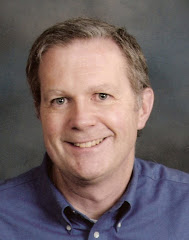

 Posts
Posts

