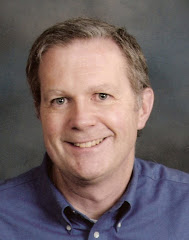
My article in the First UU Youngstown monthly newsletter, Steel Chalice.
'Tis the Season! Whether you celebrate Christmas, Hanukkah, Dongzhi or Yule, there is a civil holiday season that overarches all of these religious holidays. This civil holiday season seems to begin with Black Friday as its high holy day, launching a frenzy of consumption. Unless you live completely off the grid, you are finding yourself bombarded with messages to shop and spend, to decorate and illuminate, to entertain and party.
Many of us Unitarian Universalists find ourselves under stress at this time of year, and it is not just because of the frenetic level of activity of the season. We find ourselves consciously or unconsciously in conflict with the messages and values presented by the holiday season. Many of us find our desire to live sustainably on this earth in conflict with the hyper-consumption encouraged by the culture. We don't want our loved ones to think of us as Scrooges, but how do we show our love in non-material ways?
Others of us have discomfort with the Christmas story. We know "Christ's Mass" is a minor holiday with a long and complex history. It was not celebrated by our Puritan ancestors, as they saw it as theologically suspect. While we're no longer Puritans, many of us, as Pagans, or Humanists, or Mystics, find the Biblical story unsatisfying. Yet, we love much that surrounds Christmas: the carols, the tree, the candles, the child as a symbol of new life and hope.
Others of us have a hard time with the seasonal emphasis on celebration and joy. Maybe we are quiet by nature, contemplative, and all this extraverted exuberance is just draining for us. Or maybe we've suffered the loss of a loved one, and our grief wells up during this season. Whether the loss is recent, or this time of year is an anniversary of past loss, we find the celebration around us increases the intensity of our grief.
Others find the season amplifies family tensions, and we struggle to satisfy the conflicting desires of modern multi-nuclear families. Whose house do we go to on Christmas morning? How do we meld diverse traditions? Can we let go of our hopes for a Normal Rockwell image of the family gathering and accept our families as they are?
One of the things I love about Unitarian Universalism is that we can be intentional about how we practice our religion, as individuals and as a community. We can choose theology, teaching, tradition and ritual that makes sense for us. After all, we have been called heretics, which means 'able to choose'. Thus, I encourage each of us to make choosing a spiritual practice, especially around the holidays. Take time to contemplate what parts of the holiday season bring joy and satisfaction for you and your family, and choose how you celebrate. Pay attention to what brings you stress, and begin to change it. Ask those around you to help with these changes. Choose to make this holiday season one that makes you and yours more whole, more joyful, and more alive.
Photo by cherrypatter.
Showing posts with label spiritual practice. Show all posts
Saturday, December 05, 2009
Thursday, April 23, 2009
Heart of Meditation Retreat

Yongey Mingyur Rinpoche, a Tibetan meditation teacher, presented a wonderful meditation retreat this weekend. Rinpoche, as everyone called him, was delightfully funny ("I go to comedy school; no not really!"), with most of that humor self-directed about his life and English. Much laughter on the third day when we and Rinpoche realized simultaneously that a phrase he had frequently used: 'balah, balah, balah', meaning mental jabber or monkey mind, was his interpretation of the American 'blah, blah, blah'. How we all missed, and got it, together.
The essence of the teaching was how one can turn distractions from hinderances to meditation to help for meditation. So, we learned how background noise can be turned from an annoyance to an object of focus for meditation. Similarly with pain, sleepiness, runaway toughts, and emotions. Thus, just as we can meditate on a lovely object, we can meditate on noise, pain sensation, monkey mind, and so on. Rinpoche recounted his own discovery of this in his use of meditation to overcome panic attacks, as seen in this video:
As as I learned to meditate, I suffered through such distractions, and they made the practice difficult. I have also watched many fail to take up a practice because the distractions overwhelmed them. Not surprisingly, I fell in love with this teaching. I continue my own passage meditation practice, but plan to use these techniques when I'm distracted, and plan to use them when I teach others. And I've started to do that, with a brief teaching of meditation basics to the outpatient psych group at the hospital. Being able to give learners choices allowed us to move past the "I tried it before - it didn't work" or "That will never work for me" objections to some fruitful exploration of mindfulness.
Image from http://www.wisdom-books.com/, video originally from http://www.mingyur.org/
Labels:
retreat,
spiritual practice
Saturday, November 22, 2008
DBT as Spiritual Practice
Yesterday, I attended a one-day training on Dialectical Behavior Therapy, which we use at the hospital to treat patients with various mental illnesses, including borderline personality disorder, depression, and anxiety. As a chaplain, I see many of these patients as they try to understand their illness in terms of their religious beliefs. I've encountered DBT in conversations with these patients (many of whom love to call it Diabolical Behavior Training).DBT was created by Marsha Linehan, who drew methods from Zen Buddhism to treat suicidal patients. The Buddhist strands are apparent in this therapy. A significant focus of DBT is mindfulness training, learning to focus the mind and attend to one thing at a time. A koan-like 'both-and' aspect is the core of many messages given patients (this is the dialectic part): 'You are doing the best you can' and 'you can do better', or 'I can insist on my rights' and 'I am still a good person'. The Buddhist concept of 'skillful means' runs through the components on skills development and skillful execution.
DBT participants are required to keep a weekly diary card, on which they record numerous aspects of their feelings and behaviors, including use of the skills and abusive or harmful behaviors. The idea is to use the recording to identify patterns and linkages between feelings and behaviors, and then work to modify them.
What strikes me is that DBT looks like spiritual practice, and I mean that in the highest sense. There is an expectation (clearly stated) of mindful attention to the skills and practices. Modifications of lifestyle, such as healthy eating and sleep patterns, are expected of each participant. One is expected to apply an almost devotional repetition to the daily activities through the use of the diary card. These techniques have been shown to be helpful for patients in randomized trials; could they be helpful for all of us, whether healthy or ill? And if DBT can be seen as spiritual practice, does this not support the benefit of spiritual practice (in all forms) for all?
Picture by Untitled blue
Labels:
chaplaincy,
spiritual practice
Sunday, September 28, 2008
Sermon: Paths to the Top
Since the congregation is in an interim time, I offered to present (with the interim's approval) on the four varieties of spiritual practice that Peter Tufts Richardson developed. I invited them to add a small hand motion to the Joys and Concerns, 'from my heart out into the universe'; I mention this in the sermon.
It’s so good to be back in this space.
The last time I was here, my hands were sooty and my shirt was sweaty
as I helped my friend Mark Rosauer and several others of you
disembowel and dismantle the old pipe organ that was here.
In an odd way, that was a kind of spiritual experience.
I was glad to be included in the Tuesday morning spiritual practice group
They meet every week
to carry out various improvements to the church building.
The work is satisfying and
There is an easy camaraderie among those who do it
they come nearly every week to work together
compensated with donuts and cups of tea.
Let me assure you that there are many much larger churches
that would be hard pressed to put together even one work party
of a half dozen or more people for one project,
much less do it week after week.
For some of us, great emotional and even spiritual satisfaction
comes from that kind of consistent, devoted effort, week after week, year after year.
For others, spiritual experience comes in a flash,
some momentary event that truly reached down deep inside us,
and turned something, changed something .
Maybe it was a walk in great natural beauty,
or wonderful music, or reading profound poetry.
Whatever the source of such inspirational experiences,
I suspect most of us seek to repeat them,
to find what it is that opens us to them,
to find ways to deepen and better understand them;
and thus better understand the world we inhabit.
This is the essence of spiritual practice.
However we define spirit, the things we do,
be they working, hiking, singing, or meditating,
that carry us into place of inspiration are spiritual practices.
PRESENTATION OF THE MODEL
There's a well-known religious metaphor
that suggests we are each on a spiritual journey,
traveling up a great mountain.
There are numerous paths on that mountain,
paths that wind and cross, that lead mostly up,
but occasionally down and sometimes sideways.
Some paths are gentle and protected,
while others are exposed and treacherous.
But the point is that all these paths ultimately lead to the top,
to whatever it is that we consider ultimate in religious experience.
Most often we think of these distinct paths
as representing different beliefs,
the various theologies that co-exist in the religious landscape.
Here's the Catholic path, there's the Lutheran one,
over there a Buddhist path.
And how we bristle when a person or group
claims that their path is the 'one true path'
and all the others fail to reach the top!
For many of us, this brings up anger at such dogmatic exclusiveness.
For some, such dogmatism brings up sadness
as we recall our own, exclusivist religious upbringing,
and the effort it took us to shed those beliefs.
But there is another way to see these paths we follow to the top of the mountain.
Perhaps these journeys are more about practice than belief,
about what we do
rather than what we think or say.
But hard as it is to articulate our theological beliefs,
we often find it harder to find the words
to describe what spiritual practices touch us and inspire us.
We need a topographic map that points out these paths,
these Journeys, and gives them names.
SOURCE OF THE MODEL
How might we do this mapping?
How might we understand the varieties of spiritual experience?
Since we UUs tend to be rational scientific people,
it might make sense to organize and classify these experiences in some way.
Peter Tufts Richardson, a UU minister, does just this in his book,
Four Spiritualities: Expressions of Self, Expressions of Spirit.
He develops a model that suggests there are four broad types of spirituality,
although they are interrelated.
He suggests that our personality or worldview influences
which of these spiritual practices we will find most appealing.
Now Richardson does not pretend this is a new idea.
He melds an understanding of spiritual practices
from many of the great world religions
to frame his unifying model of four spiritual paths.
Richardson's model also combines these religious ideas
with two specific dimensions of Jungian psychology.
The first dimension is how we perceive the world.
Do we primarily perceive through our senses or through our intuition?
In other words, do we observe things with common sense,
or do we just know through hunches?
The second dimension is how we make decisions.
Do we make choices primarily by thinking things through
or by tapping into our feelings?
That is to say, do we lead with our head or our heart?
The two options in each of these two dimensions
generate the four spiritual Journeys
that we’ll examine shortly.
But before we do, let me note that these four quadrants
are closely related to the Myers Briggs Type Indicator ,
which many of you may be familiar with.
Myers Briggs is personality tool often used to study how people might work together.
We don’t have time to explore it more deeply today,
but I will mention it as we explore these spiritual types.
If you’re not familiar with Myers Briggs, I'd suggest a little internet research;
you can evaluate your 'type' on-line, and it can be quite revealing.
So, Richardson’s model outlines four pathways
through which we experience the realm of the spirit.
I'm going to spend a little time exploring each of the four Journeys,
and touching on how they relate to each other.
I think as we explore these pathways,
some of you may recognize yourselves
or maybe your friends or family.
THE FOUR PATHS
(Move to first location, equipped with a large book - open it to reading.)
The first path is called the Journey of Unity.
The Journey of Unity focuses on the great organizing principles of the universe.
What are the great questions, and what might the answers be?
The focus here tends to be an intellectual one,
with deep theological or philosophical explorations as part of the conversation.
People on this path perceive the world through their Intuition,
these are the folks who try to read between the lines, and consider future possibility.
They base their decision-making on Thinking;
that is on the head, depending on rationality, rather than the heart.
Followers of this particular path are a minority in the general population,
but they are significant in Unitarian Universalist communities.
Our worship experiences reflect this. We love discussion groups.
In most UU churches, the sermon is the center-point of the worship, with academic quality talks, carefully prepared, even down to the footnotes.
Does this sound familiar? (hands)
(Move to next location, a carafe, and pour a cup: “Regular or Decaf?”)
The second path is the Journey of Works.
The people in the Journey of Works are focused on getting things done.
This is where the Tuesday work crew that removed the organ comes in.
These are responsible people with a job to do.
People here are head oriented, reasoning things out,
and they see the world as it is now, through their senses.
They see what is missing, or what is not working, and move to fix it.
They prefer to have rules, they love tradition,
and they want people to follow the rules and respect the tradition.
Tradition and rules are important here,
but that doesn't mean that people on the journey of works are necessarily conservative.
In fact, I'd suspect that in our congregations,
many of the folks on the front lines of social justice work
would say they are on the Journey of Works.
(Move to the next location, equipped with a votive candle - light it.)
The third path is the Journey of Devotion.
This path is about ritual: lighting candles, reciting the words,
singing familiar hymns, joyful celebrations, these are all important.
Repetition, symbolism and stories are important,
especially stories about heroic people from our past.
This is one of the two heart-centered Journeys, and we see a subtle shift,
to the realm of emotional response in spirituality and worship.
Like the Journey of Works, those on this journey are focused on the here and now,
but the focus is on the ritual or the experience itself.
The Journey of Devotion is well represented in larger society,
but I think it is less represented in Unitarian Universalist communities.
I think our history in the radical side of the Protestant dissenting traditions
caused us to be leery of ritual for a long time.
(Move to the final location, equipped with a singing bowl - sound the bowl.)
The fourth path is the Journey of Harmony.
This is the realm of the mystics,
of those who have a sense that the world is not fully revealed to us,
but who get glimpses of the ultimate reality that they struggle to put into words.
Meditation and silence are key elements of spiritual practice for those on this path.
This particular path merges the Intuitive ways of knowing the world
with decision-making based on Feeling, on the heart.
In our Unitarian history, the Journey of Harmony
flowered most profusely in the Transcendentalist movement.
When you read the works of the Transcendentalists like Emerson or Parker,
you struggle to understand what they are saying,
because they struggled to find words for their newly felt experiences of the divine. Everything is connected, god inside us and all around us, knowing oneself,
these were all difficult concepts that to some degree have to be lived to be understood. And we live them through turning inward.
(Move to center of space)
So I want to ask you to choose:
which of these paths best fits your own personal spiritual nature?
If you feel comfortable doing so, I’d like to ask you to stand and remain standing,
as I call out these paths. (Hold up the objects as the types are named)
Let’s start with Journey of Unity, seeking the answers?
Journey of Works, getting things done?
How about Journey of Devotion, who love ritual?
Journey of Harmony, lovers of mystery?
Look around!
(Return to lectern)
If some of you struggled to choose just one path, that's good!
I think a well-developed spiritual life should draw practice from each of these paths.
I know that for me, the Journey of Harmony is most natural path.
I find daily meditation an easy practice.
But I try to engage the other paths, through reading, improv movement,
and working in stained glass.
Perhaps you might want to explore what spiritual practices might broaden your horizons.
COMMUNITY
Now that we understand a little more about our individual spiritual journeys,
how can we apply them to our communal worship life?
A congregation develops a spiritual “style” just as surely as individuals do.
Our worship may emphasize great preaching,
or maybe well executed drama or ritual,
or silence and meditative music.
But we should also ask, is there enough balance for everyone?
I recently read an article about a man who finally understood his discontent
with his long-time family church -- he was of one spiritual type
and the church was strongly opposite that type.
His longtime family ties kept him at that church,
but he understood that he needed to fill some of his spiritual needs in other ways.
Once a congregation understands its own worship style,
it can make changes in its style to better provide for people on the other paths.
Changes to the typical order of the Sunday morning worship,
or to the music program, might be called for.
Or, maybe separate worship groups, like meditation groups
or small group ministries, or discussion forums are needed.
We explored such a change briefly today,
by modifying the joys and sorrows slightly.
We added a simple body movement,
a small communal ritual.
How did that make you feel?
Even small experiments like that can reveal much.
REINTEGRATION
This little exercise we did today
– when you stood up as I named the four Journeys –
brings up deeper issues around identity and belonging.
I'm sure you were curious when your friends stood up!
By more or less artificially segmenting ourselves into these four categories,
we create new identities and labels for ourselves.
Such labeling can be helpful if it serves
to deepen our understanding of one another and ourselves.
Such identities are valuable if they urge us to greater wholeness and balance,
and if they instill a greater compassion for those who are different from us.
Ultimately, if we do that compassionate work,
we find we can put the labels aside,
and see that our identities are less important than realizing that
we are all on the same journey.
In that ancient Hindu text, the Bhagavad-Gita, chapter 12,
the human protagonist Arjuna questions the god Krishna
about achieving enlightenment and eternal life,
and asks, 'which way is swift and sure, love or knowledge?'.
Krishna answers in much detail, finally noting in chapter 13:
Some by the path of meditation,
and by the grace of the spirit,
see the spirit in themselves;
some by the path of the vision of truth,
and others by the path of work.
And yet there are others who do not know,
but hear from others and adore.
They also cross beyond death,
because of their devotion to words of the truth.
And we see that all of these spiritual journeys
lead to the same unknowable and mysterious end.
May we be cognizant of this truth
both in our individual spiritual lives
as we live together in this gathered community.
Picture from UU Congregation Eau Claire.
Labels:
sermon,
spiritual practice
Saturday, September 06, 2008
Blue Mountain Meditation Retreat
The theme of the retreat was renewal, and much of the focus was on getting out of 'doldrums', periods in which our meditation (or any spiritual practice, for that matter) seems flat and unfulfilling. We explored ways to rejuvenate our practice, such as identifying and eliminating bad habits (I notice that I unconsciously shift my feet during meditation, for example), ways to choose and deepen our relationship with the passages we use for meditation, and strategies for using time set aside for specifically for renewal. I found this to be an appealing concept - periodically, I do need to reflect on my practice, and more often than at an annual retreat.
I thought the idea of renewal also spoke to changes with the Blue Mountain Center. Easwaran died before I began this practice, so I never met him. My sense is that his unexpected death meant that the organization struggled for some time, first just to survive, then sort out leadership and direction. Easwaran did not want to create a religious organization in the eastern tradition, so he did not formally ordain other teachers. The organization is now affirming its identity under the leadership of Easwaran's wife Christine, and moving on an expanded mission, a time of renewal, with specific programming for youth and for elders and those confronting death. Even though I'm just an ordinary practitioner and occasional retreatant, I'm excited and hopeful about this new phase. The Eight Point Program has been valuable for me, and I want to see these teachings continue to be kept fresh and offered to others.
Labels:
retreat,
spiritual practice
Tuesday, August 05, 2008
Making Retreat with the Jesuits
This last weekend, I 'made' a silent retreat with some sixty men, almost all Catholic, at a the Demontreville Jesuit retreat center near St. Paul. Most of the folks in this crowd were spiritually intentional laypeople, some served as deacons in their parishes, many had attended this retreat once a year for more than twenty years. It was silent: other than a conversation with the retreat leader, I was silent from after dinner Thursday night to dinner Sunday night.
The retreat leader, Father Jim Flaherty, teaches philosophy at Marquette University. He's a grad of JSTB, the Jesuit school that's part of the Graduate Theological Union (which includes Starr King School); we connected in remembering our times in Berkeley.
For a person who grew up with little contact with Catholic rituals and traditions, the learning curve for me was quite steep! And I had to work overtime to translate theology, language and narrative into something that I could work with in my own UU context. These Jesuits know how to pray! Like many UU's, prayer has been an issue for me, and I've struggled to find its utility in my process-based theology. I want to see prayer as more than just 'talking to God', certainly more than 'telling God what to do' (I saw a lot of that in the south). The retreat offered a number of methods for introspection and contemplation, for getting out of the head and into the heart. I hope to explore how these connect with other practices I've encountered (Buddhist, Islamic) and my own passage meditation practice.
The retreat leader, Father Jim Flaherty, teaches philosophy at Marquette University. He's a grad of JSTB, the Jesuit school that's part of the Graduate Theological Union (which includes Starr King School); we connected in remembering our times in Berkeley.
For a person who grew up with little contact with Catholic rituals and traditions, the learning curve for me was quite steep! And I had to work overtime to translate theology, language and narrative into something that I could work with in my own UU context. These Jesuits know how to pray! Like many UU's, prayer has been an issue for me, and I've struggled to find its utility in my process-based theology. I want to see prayer as more than just 'talking to God', certainly more than 'telling God what to do' (I saw a lot of that in the south). The retreat offered a number of methods for introspection and contemplation, for getting out of the head and into the heart. I hope to explore how these connect with other practices I've encountered (Buddhist, Islamic) and my own passage meditation practice.
Labels:
retreat,
spiritual practice
Saturday, February 02, 2008
Interplay Visits Unity Church
What fun to connect with this new playgroup! We had almost a dozen people there, and moved up into the Ames Chapel to have enough space to move and because the chapel has a live, bouncy floor. Everyone enjoyed the ambiance of that space, with its stained glass windows, clear light, and massive architecture.
I was especially pleased that one of my Interplayer friends from Oakland was in town, and came to play with us. I hope she enjoyed some of the creative forms of the Twin Cities group, like the 'directed duet' form, in which two persons are each directed in their movement by two other persons. Directing consists of simple instructions like 'swing', 'be joyful', 'you are confused', or 'roll around'. The mixture of leading and following and interacting and aloneness that emerges from this form can be especially rich.
After that, my friend contributed joyful music to the group. She introduced a wonderful toning and singing form, having us lie on the floor with our heads touching, and then singing a harmonious song together. Having her with us reminds me of the interconnectedness of this small, but vibrant community of movers and singers and improvisers.
Labels:
spiritual practice
Thursday, September 20, 2007
Journaling as Spiritual Practice
Yesterday in a staff meeting, we had a brief discussion of spiritual practices. Amidst some interesting practices such as setting out seasonal decorations or making the bed each morning, (and with one of ours offering a sermon recently on "Chicken Keeping as a Spiritual Practice"), I almost felt that my offered practice seemed, well, ordinary. My ordinary and boring practice is keeping a journal, and I admitted I don't even do a good job of it.
For years I struggled to keep written journals, starting as high school class assignments, and then as reflection tools. I'd invariably keep these up for a time, then quit writing. I do better now, more on than off, and I think part of the reason is technology.
I'm a left-handed writer, so writing more than a few words with a pen has always been a chore. Pushing the hand along smears the work. Fancy blank books have bindings that get in the way; spiral notebooks just hurt when you lay the hand on them.
I've learned that the keyboard is my tool of choice. I've figured out that the easiest way for me to journal is to write myself an email. I give it a title with the word Journal in it, and a gmail filter automatically routes these messages off to a special folder and marks them 'read'. These emails lay around, rarely read, as for me, most of the benefit of a journal is in the writing, not the reading.
Every now and then, though, I find I need to recover something. Rather than flipping through pages, I can use search to find key words. Often I get little surprises this way, for there may be similar items I've forgotten about: like entries about the constant rain my first spring in Berkeley. Then it is fun to go find the entries near that item, and recover a taste of that time.
I'm not going to pretend this made my journaling practice a deeply grooved habit, as there are still big stretches of time where I just am too busy or stressed to write. But this journaling method is accessible - I can jot a few sentences down into a draft email whenever I have a free moment near the computer. And I don't worry about losing my notebook.
For years I struggled to keep written journals, starting as high school class assignments, and then as reflection tools. I'd invariably keep these up for a time, then quit writing. I do better now, more on than off, and I think part of the reason is technology.
I'm a left-handed writer, so writing more than a few words with a pen has always been a chore. Pushing the hand along smears the work. Fancy blank books have bindings that get in the way; spiral notebooks just hurt when you lay the hand on them.
I've learned that the keyboard is my tool of choice. I've figured out that the easiest way for me to journal is to write myself an email. I give it a title with the word Journal in it, and a gmail filter automatically routes these messages off to a special folder and marks them 'read'. These emails lay around, rarely read, as for me, most of the benefit of a journal is in the writing, not the reading.
Every now and then, though, I find I need to recover something. Rather than flipping through pages, I can use search to find key words. Often I get little surprises this way, for there may be similar items I've forgotten about: like entries about the constant rain my first spring in Berkeley. Then it is fun to go find the entries near that item, and recover a taste of that time.
I'm not going to pretend this made my journaling practice a deeply grooved habit, as there are still big stretches of time where I just am too busy or stressed to write. But this journaling method is accessible - I can jot a few sentences down into a draft email whenever I have a free moment near the computer. And I don't worry about losing my notebook.
Labels:
spiritual practice
Saturday, September 08, 2007
Picking up the Pace
Tomorrow marks "opening day" for many churches, the day when they switch from a more relaxed summer schedule to the fall pace. According to the local paper, many churches call this "Rally Sunday", or "Kickoff Sunday", or "Homecoming Sunday" or some name apparently drawn from the world of football. The term used at Unity is "Service of Reunion", which at least sounds appropriately religious.
Tomorrow, we go from one service to three, our Wellspring Wednesday evening service and programming starts this week, and Religious Education starts next Sunday. I'm already feeling the heightened energy that this pace brings. I've been to several Pledge Team meetings this week as they prepare for the launch of the stewardship program in a few days. It is easy to get drawn into such a frenetic pace, with so much going on, to begin to do everything in a hurry, to try to be all things to all people.
The name of this blog is Slowing Down, which is my reminder to myself that there is a better way than frenzy. Slowing Down is one of the points of the Eight Point Program, which is the foundation of my daily spiritual practice.
For me, slowing down is being mindful of the tasks I choose to take on. I try to avoid overloading myself with commitments and activities that I cannot complete, so that I can do what is most useful to those around me and to myself. I try to pace myself, so that I don't find myself doing unneeded rework. I also try to keep my perfectionist tendencies from causing me to waste time with unnecessary thoroughness. This is very hard for me at times.
A friend says he "slows down in order to go fast." If going fast means attending to what is truly important, and letting go of the rest, I am striving for that kind of speed.
Tomorrow, we go from one service to three, our Wellspring Wednesday evening service and programming starts this week, and Religious Education starts next Sunday. I'm already feeling the heightened energy that this pace brings. I've been to several Pledge Team meetings this week as they prepare for the launch of the stewardship program in a few days. It is easy to get drawn into such a frenetic pace, with so much going on, to begin to do everything in a hurry, to try to be all things to all people.
The name of this blog is Slowing Down, which is my reminder to myself that there is a better way than frenzy. Slowing Down is one of the points of the Eight Point Program, which is the foundation of my daily spiritual practice.
For me, slowing down is being mindful of the tasks I choose to take on. I try to avoid overloading myself with commitments and activities that I cannot complete, so that I can do what is most useful to those around me and to myself. I try to pace myself, so that I don't find myself doing unneeded rework. I also try to keep my perfectionist tendencies from causing me to waste time with unnecessary thoroughness. This is very hard for me at times.
A friend says he "slows down in order to go fast." If going fast means attending to what is truly important, and letting go of the rest, I am striving for that kind of speed.
Labels:
spiritual practice
Subscribe to:
Posts (Atom)